


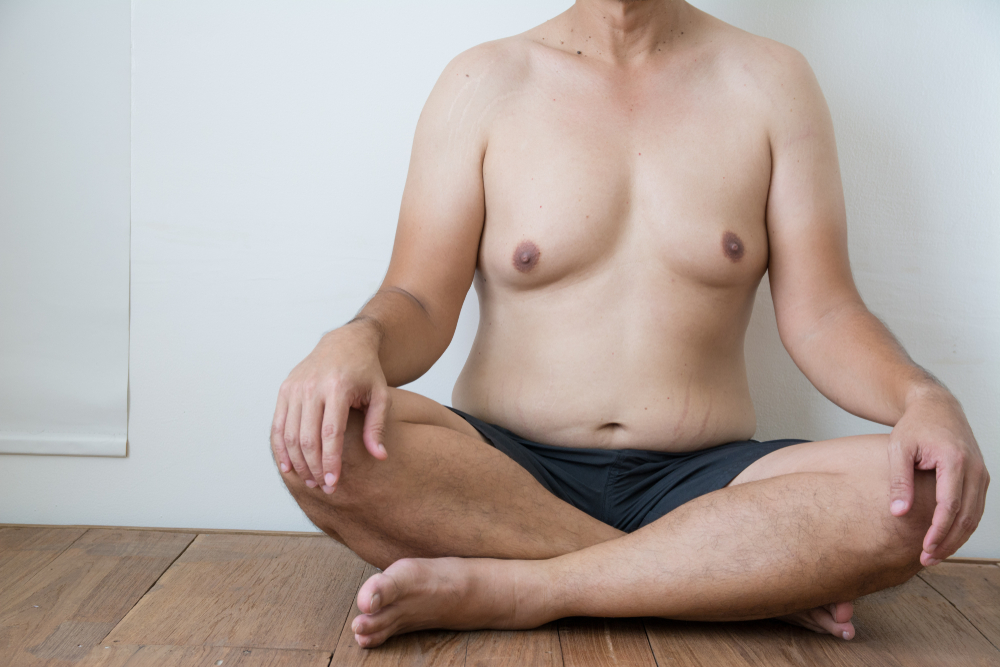
Gynecomastia treatment involves reducing excess male breast tissue. David Bray, Jr., MD brings triple-board-certified surgical training to male breast reduction planning, including certifications in plastic surgery, facial plastic and reconstructive surgery, and otolaryngology-head and neck surgery.
What Happens Right After Gynecomastia Surgery?
Gynecomastia surgery may involve removing excess glandular breast tissue, fat, or both. In some cases gynecomastia surgery may also involve removal of excess skin. Your recovery plan depends on your anatomy, the amount of tissue removed, and whether liposuction is part of the procedure. The early recovery period usually focuses on controlling swelling, protecting the chest, and allowing the treated area to settle.
It is normal to have swelling, bruising, soreness, and a firm or tight feeling in the chest at first. Dr. Bray will see you after surgery to monitor these changes. These changes should gradually improve as your body heals. Dr. Bray and his team will give you specific instructions for activity, incision care, compression, and follow-up visits.
Why Compression Garments Matter
Many men are asked to wear a compression garment after gynecomastia surgery. This helps support the chest tissues, limit swelling, and encourage the skin to adapt to the new contour. The garment should feel supportive, not painfully tight.
Wearing it as directed can make recovery feel more controlled. It may also help reduce the chance of fluid buildup and uneven swelling. If something feels uncomfortable or unusual, our team can help you decide whether the garment needs adjustment.
Returning to Work, Exercise, and Daily Routines
Most men can return to light daily activities before they return to strenuous workouts. Desk work or low-demand routines may be possible sooner than physically demanding work. Heavy lifting, chest workouts, and intense exercise usually need more time.
You should not rush your return to the gym, even if you feel good. The chest is still healing under the surface, and too much strain too early could compromise the result or lead to a complication. Dr. Bray will let you know when it is safe to resume your normal routine.
What About Scars and Final Chest Shape?
Incisions for gynecomastia surgery are often placed in areas where they can heal discreetly, depending on the technique used. In many cases an incision is placed at the lower edge of the areola. Additional incisions may be used if skin removal or liposuction are required.
Your final chest shape will not be visible right away. Swelling can make the area look puffy or uneven during the first stages of recovery. Reviewing gynecomastia gallery photos can help you see examples of surgical contour changes, but your result will depend on your body and healing process.
Gynecomastia Surgery Recovery in Torrance, CA
If enlarged male breast tissue affects your comfort, clothing choices, or self-image, our team can walk you through what recovery may involve. To talk with David Bray, Jr., MD about gynecomastia surgery in Torrance, CA, contact us or call 310-326-9400.

